by Barker Realty, Inc. | Jul 21, 2020 | Barker Realty, Raleigh Property Management
How To Improve Curb Appeal
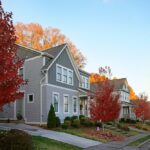
Breathing new life into the outward appearance of your home is sometimes easier said than done. However, there are simple ways that you can jazz up your home’s aesthetic without bending over backward. As you make these changes, your house will look more appealing, which will help you lease your property faster. For guidance on how to improve curb appeal, below are some tips from our property managers in Raleigh.
1. Tend To Your Lawn
An unkempt lawn is an eyesore. Trimming your hedges, mowing your grass, and pulling your weeds will improve your curb appeal drastically. If you don’t have a green thumb, hire experts. With their professional touch, your lawn will look perfectly manicured in no time.
2. Clean Your Windows
From smudges and water spots to grime and debris, windows collect all kinds of blemishes. With a simple cleaning solution, you can bid farewell to your dirty windows. With some squeaky clean panes, your house will look fresh and sparkling.
3. Clean Your Driveway
As local property managers, we know how unappealing driveways can look over time. Filling in cracks and correcting discoloration will upgrade your home tremendously. Go the extra mile by painting your driveway a natural color. Gray, black, and brown are some suitable options.
4. Enhance Your Entrance
One surefire way to make your home more aesthetically pleasing is by adding pizzaz to your front door. Painting your door is always an option, but you can also add a wreath, put out plants, and install light fixtures to make your entrance more inviting.
Work with Our Leading Property Managers In Raleigh Today
If you want your property to lease fast, heed the above advice. For more information on how you can improve your home’s curb appeal, speak with one of our specialists. With our expertise and experience, we know what it takes to achieve that extra wow factor.
by Barker Realty, Inc. | Jul 7, 2020 | Barker Realty, Local Property Management, Raleigh Property Management
Today, many local property investors are millennials than the baby boomers generation. However, this has not been an easy walk for the millennials, especially those buying houses for the first time in North Carolina. Whether they’re looking for homes to live or looking to be local property investors, many face financial hurdles.
Most millennials homebuyers have a bad credit score and negative debt-to-income ratios. So, how can the Millennials be part of Raleigh NC property investors? Here are a few tips to look at.
Tip# 1 Improving Their Credit Score
Credit score affects the amount of mortgage loan millennials can access and the interest rate they will be charged for the loan. A good credit score means easy access to a mortgage loan with low-interest repayment rates.
Millennials with low credit scores should consider the following to increase their credit scores:
- Prioritize to pay the highest interest debts. These could be credit card debts or any other debt from a financial institution.
- Advise their family members who wish to gift them to help in paying off any lingering debt.
- After they are done with clearing debts, they can start saving for a down payment for their favorite house.
Tip# 2 Searching For a House Within Their Budget
The increasing prices for properties is a challenge for the millennials. They should avoid falling for the temptation of buying a home that is not within their price range. Millennials should understand that other financial goals, such as a retirement plan, should not be sacrificed.
It is advisable to search for a property investor near me who is selling a home for an opportunity to choose the most suitable property.
Tip# 3 Millennial Homebuyers Should Learn to Negotiate
Buying a home is like any other business transaction. It is, therefore, crucial that millennials home buyers should master how to negotiate. Millennials’ home buyers can negotiate to have the old and faulty fittings in a home be remodeled at the seller’s cost. Alternatively, they can ask the property investor near me to bring down the house’s price, saving them some dollars.
Contact Barker Realty today to discuss how we help many Raleigh NC property investors manage their properties and keep cashflow steady.
by Barker Realty, Inc. | Jun 23, 2020 | Property Management Company, Raleigh Investment Property, Raleigh Property Management
Owning property is a great investment, as it requires little daily effort once you’ve made the initial commitments. If you’re ready to break into the Raleigh real estate market, here are some real estate investment tips that will help you launch your investing career.
Remember That Real Estate Property Appreciates
Unlike some purchases, like cars, your real estate property investment will not necessarily depreciate after your purchase. In fact, some property owners find that the value of their investment far exceeds what they paid. For example, if you buy a single-family home or apartment building for a low price, manage it through a real estate management company, and sell it after it appreciates, you can get an excellent return on your investment with minimal trouble or hassle.
Don’t Be Afraid To Start Small
Perhaps you cannot currently afford to invest in a large apartment building–or you can, but are nervous about making such a big commitment. Not a problem! Even if you purchase a small house and rent out the property to tenants, you are still considered an investor. You can gain experience with your smaller purchase, and then work your way up to a bigger investment over time.
Work with A Professional Real Estate Manager
Rental property doesn’t come with the uncertainty that many investors suffer when putting their money into the stock market–but it does come with some risk. In order to ensure the best success possible, work closely with a real estate management company to understand the cost of maintaining a certain property; taxes and insurance requirements, and all the other details.
Build Up an Investment Budget
While real estate can yield substantial returns in the long run, you should expect a minimal return for the first two years. For that reason, you may want to consider paying for your property in cash, so that you do not accumulate interest or risk foreclosure. You can also, of course, take out a small loan, if you are confident that you can pay the mortgage without monthly rent coming in. When you’re ready to start investing, Barker Realty’s experienced sales brokers can help you explore the best financing option for you.
by Barker Realty, Inc. | Jun 9, 2020 | Barker Realty, Investment Property Blog, Raleigh Investment Property, Raleigh Property Management
If you haven’t been keeping count, the millennial generation is—almost—all grown up. The youngest, born in 1996, will be turning 24 this year, and the oldest, born in 1981, will be 34. As this unique generation enters its next stage of life—a stage potentially involving marriage, kids, and higher salaries—researchers are watching closely to see where they’ll head to next. And all the data collected so far shows that, like their parents before them, millennials are ditching huge metropolises for cleaner, greener pastures. In today’s post, we’ll discuss how many are leaving, where they’re going, and what this means for Raleigh investment property owners.
The Numbers So Far
According to data released by the U.S. Census Bureau last year, big cities lost about 27,000 young adults in 2018. A “big city” was defined as a city with more than 500,000 residents—such as New York, San Francisco, Chicago, and Houston—and a “young adult” was defined as a person between the ages of 25 and 39. More alarmingly, 2018 marked the fourth consecutive year with such a noticeable decline. Although a quick Google search turns up plenty of claims that millennials are flocking to big cities, census data suggests the reverse is true.
Where They’re Heading
Luckily for Raleigh property owners, census data also shows where those young people are moving to: mid-sized cities that are still urban, but smaller and more affordable. The most popular millennial destinations included Denver, Austin, Nashville, Portland, and, you guessed it…Raleigh! All of these cities are known for having a vibrant, youthful population; a thriving urban scene; and housing that, while not cheap, is not prohibitively expensive. And with populations that hover around the 500,000 mark, instead of high above it, there’s a lot more room for newcomers to move their elbows, too.
What About the Suburbs?
Census data also showed that millennials are increasingly migrating to suburban areas, as well. But the line between a “suburb” and a mid-sized city was not well defined. Speaking to CNBC, tax policy expert Cathy Koch noted that the two terms are not mutually exclusive. “The ‘suburbs’ may very well be smaller cities close to larger urban areas…these still afford the richness of city living, including employment opportunities, at maybe lower home prices.”
What This Means for Raleigh Property Managers
Even though the world has been thrown into some uncertainty by the coronavirus outbreak, this data shows that Raleigh isn’t down-and-out—not by a long shot. In fact, an argument could be made that in terms of cities, we are among the most well-positioned to survive and thrive in an economic downturn. With a population of about 474,000 people, we are just barely under the “big city” qualifier; we offer all of the advantages of a sparkling urban center, without metropolitan drawbacks such as crowding and congestion. Our nationally-ranked universities and technological hubs like the Research Triangle Park continue to draw educated, professional young adults from all over the country; adults with families, needs, and purchasing power. Finally, although Raleigh has been criticized for being less artistically-focused than some of its neighbors, our STEM specializations would be an advantage in a recession, as medicine and technology will always be human necessities. In conclusion, if you are considering purchasing an investment property sometime soon, Raleigh is an excellent choice.
Barker Realty, Inc. has provided leading real estate management and property services to Raleigh residents since 1984. We help both experienced and first-time property owners select lucrative real estate options, and provide any property management services they might need. To learn more, please click here.
by Barker Realty, Inc. | May 19, 2020 | Property Management Blog, Property Management Company, Raleigh Investment Property, Tips for Landlords
As a property owner, you are probably already aware that service animals must be accommodated in all public property, including rental property. However, since the line between “service animal” and “therapy animal” can be a bit blurred, upholding accommodation laws can be a bit confusing. Here’s everything you need to know about having service animals in your apartment complex, condo unit, or rental home.
Service Animals vs. Emotional Support Animals
The Americans with Disabilities Act (ADA) classifies a service animal as a dog—not any other animal—that is trained to perform tasks for a disabled person (defined as someone with “a physical or mental impairment that substantially limits one or more major life activities.”) Importantly, the dog must be trained to take a specific action to assist its owner; for example, alerting a diabetic that his or her blood sugar levels are too low.
An “emotional support animal”, however, does not take a specific action to assist its owner. So, for instance, if a dog is trained to sense a panic attack, and bring the owner medication or a phone, it is legally defined as a service animal. But if the dog merely helps provide therapeutic comfort through its presence, it is not considered as a service animal under the ADA or Fair Housing Act.
Many animal rights groups encourage pet owners to obtain a doctor’s note stating that they have a medical need for an emotional support animal. However, the ADA is firm on the fact that a doctor’s note does not turn a companion animal into a service animal. While emotional support animals, comfort animals, or therapy animals are often used to relieve loneliness, depression, anxiety, and certain phobias, they are not protected as service animals unless they have been specifically trained to perform a task for a disabled person. Medical conditions such as anxiety and depression, while serious, are usually not considered disabilities.
Service Animals and the Fair Housing Act
Importantly, if a person is disabled, it does not matter if the animal is a service or companion animal. Under the Fair Housing Act, landlords must provide reasonable accommodations to people with disabilities so that they have an equal opportunity to enjoy and use a dwelling. In cases when a person with a disability uses an emotional support animal, a reasonable accommodation may include waiving a no-pet rule or a pet deposit.
Property owners may not ask a housing applicant about the existence, nature, and extent of his or her disability. However, an individual with a disability who requests a reasonable accommodation may be asked to certify, in writing, (1) that the tenant or a member of his or her family is a person with a disability; (2) the need for the animal to assist the person with that specific disability; and (3) that the animal actually assists the person with a disability.
Need Help Managing Your Raleigh Investment Property?
Hopefully, these tips will help you be fully ADA compliant when it comes to the subject of service animals. However, it’s important to remember that laws vary from state to state, and decisions can always be challenged or disputed, so if you have any confusion in this area it’s best to hire legal counsel. If you need help managing your Raleigh investment property or tenants, contact Barker Realty today.