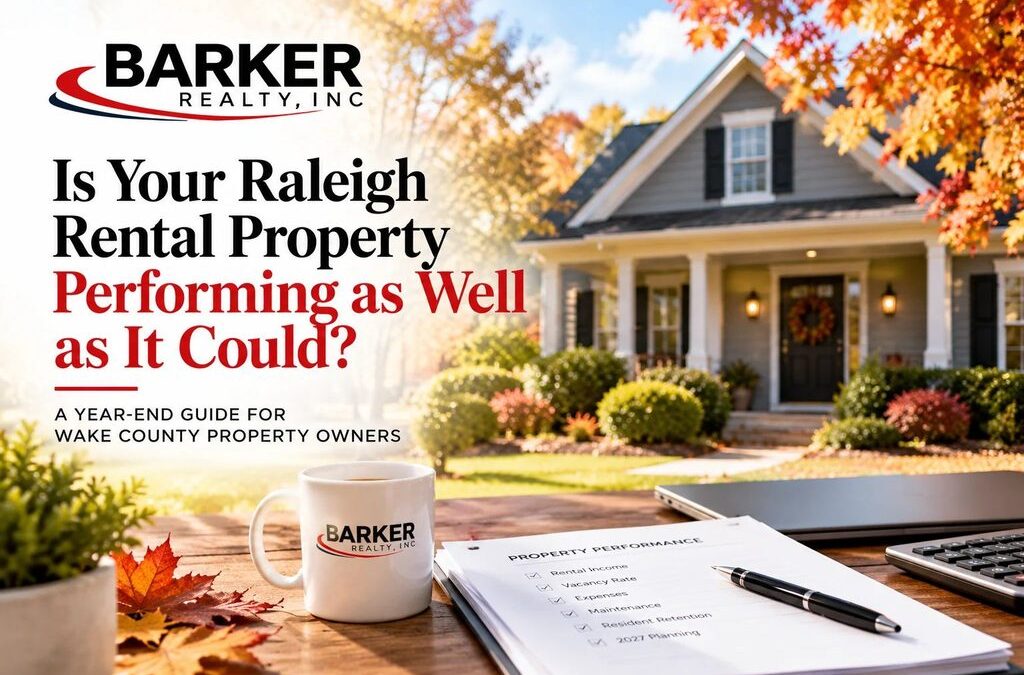
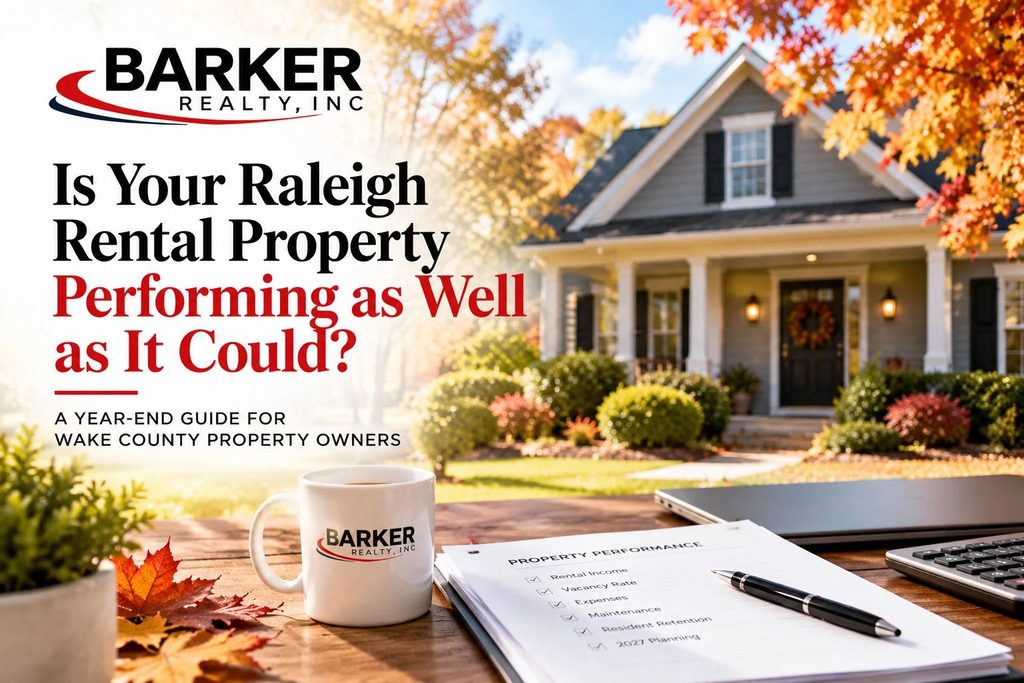
A Year-End Guide for Wake County Rental Property Owners
Owning a rental property is an investment in your financial future. But collecting rent each month doesn’t necessarily mean your property is performing at its full potential.
As 2026 draws to a close, now is a good time for rental property owners throughout Raleigh, Cary, Wake Forest, and Wake County to evaluate their property’s performance and identify opportunities for the year ahead.
From rental income and vacancy periods to maintenance expenses and resident retention, understanding a few key factors can help you make more informed decisions about your investment.
1. Look Beyond Monthly Rental Income
Rental income is an important measure of performance, but it doesn’t tell the entire story.
A property generating consistent rent payments may still have opportunities for improvement when you consider operating expenses, maintenance costs, and periods of vacancy.
Start by reviewing:
Rental income: How much rent did your property generate throughout the year?
Operating expenses: What did you spend on maintenance, repairs, insurance, property taxes, and management?
Vacancy costs: How much potential rental income was lost between residents?
Unexpected expenses: Were there significant repairs or other unplanned costs?
Comparing annual income against expenses can provide a clearer picture of your property’s operating performance.
For a more complete investment assessment, owners should also consider mortgage payments, financing costs, and anticipated capital improvements.
2. Evaluate Your Rental Rate Against the Local Market
Rental markets change, and the price that made sense when a lease began may not reflect current conditions.
In Raleigh and surrounding Wake County communities, rental demand and pricing can vary by neighborhood, property type, condition, and available inventory.
As you evaluate your property, consider:
Is your rental rate competitive with comparable properties?
Have neighborhood conditions or competing listings changed?
Does the property’s condition support its current asking rent?
Would a rental adjustment help attract or retain a qualified resident?
Setting the highest possible asking rent isn’t always the most profitable strategy.
For example, a $100 monthly rent increase generates $1,200 over a full year of occupancy. But an additional month of vacancy could offset that increase, depending on the property’s rental rate.
The objective is to find a balance between competitive pricing, qualified residents, and consistent occupancy.
3. Understand the Impact of Vacancy and Resident Turnover
Every rental property experiences turnover at some point. However, the frequency and duration of vacancies can have a meaningful impact on overall performance.
When a resident moves out, owners may face expenses associated with cleaning, repairs, marketing, and preparing the property for its next occupant.
There is also the potential loss of rental income while the property remains vacant.
Consider these questions during your year-end review:
How many days was your property vacant this year?
How long did it take to secure a qualified resident?
Were there avoidable delays between residents?
Are upcoming lease expirations being addressed proactively?
Resident retention can be an important part of minimizing unnecessary turnover.
Responsive maintenance, clear communication, and thoughtful lease renewal planning can contribute to a positive rental experience while helping owners maintain more consistent occupancy.
4. Review Maintenance Expenses and Property Condition
A rental property’s physical condition directly influences its long-term performance.
While some maintenance expenses are unavoidable, postponing necessary repairs can sometimes lead to larger and more expensive problems.
A year-end review should include both completed maintenance and anticipated needs.
Consider evaluating:
Heating and cooling system condition
Roof, gutters, and drainage
Plumbing and water-related concerns
Appliances and major equipment
Exterior paint, landscaping, and general curb appeal
Potential improvements that may support future rental value
For Wake County property owners, seasonal weather changes make preventive maintenance particularly important.
A proactive maintenance plan can help preserve property condition, improve the resident experience, and make future expenses more predictable.
5. Prepare Your Rental Property Budget for 2027
Understanding your property’s 2026 performance is only the first step. The next is using that information to plan for the year ahead.
Consider developing a 2027 property budget that accounts for expected operating expenses, routine maintenance, potential repairs, and future improvements.
You may also want to evaluate upcoming lease renewals, insurance costs, property taxes, and whether your current rental strategy continues to support your investment objectives.
A well-informed budget can help owners prepare for expenses rather than react to them.
6. Consider Whether Your Property Management Strategy Is Working
Managing a rental property involves more than collecting monthly rent.
Leasing, maintenance coordination, resident communication, financial reporting, and day-to-day property oversight all influence the ownership experience.
As you evaluate your investment, ask yourself:
Am I receiving clear information about my property’s financial performance?
Are maintenance needs being handled efficiently?
Is my property being marketed and priced competitively?
Are resident concerns and lease renewals addressed proactively?
How much personal time am I spending managing the property?
For some owners, professional property management can provide the local knowledge, operational support, and consistent oversight needed to manage these responsibilities more effectively.
A Stronger Rental Property Strategy Starts With Better Information
Successful rental property ownership requires ongoing attention to both financial performance and property condition.
By reviewing rental income, expenses, vacancy periods, resident retention, and maintenance needs, Wake County property owners can identify opportunities to improve their investment strategy heading into 2027.
Barker Realty has served Raleigh and the surrounding Triangle communities since 1984, providing full-service residential property management for local and out-of-area property owners.
Whether you own one rental home or multiple investment properties, our team understands the responsibilities involved in managing residential real estate.
Ready to take a closer look at your rental property management strategy?
Visit barker-inc.com to learn more about Barker Realty’s property management services.
In a recent article for Forbes titled “How To Spot Real Estate Investment Opportunities” (April 2025), author James Nelson explores what separates savvy real estate investors from the rest of the market. His key message? Great investors don’t just react—they anticipate. They study trends, uncover unmet needs, and execute with discipline. At Barker Realty, we believe these principles apply powerfully to real estate investing right here in Wake County, North Carolina.
With over 40 years of experience in the Triangle, we’ve seen firsthand how early insights and local expertise lead to stronger returns—and stronger communities. Below, we apply Nelson’s insights to our region’s fast-growing and competitive market.
1. Watch Local Trends Before They Go Mainstream
Nelson emphasizes the importance of recognizing market trends early. In Wake County, this means tracking things like:
Major infrastructure investments (like BRT expansions or road improvements)
Zoning and land use changes in municipalities like Cary, Garner, or Holly Springs
Where local employers are expanding or relocating
Being early to these shifts means you’re more likely to acquire undervalued assets before demand spikes.
2. Curiosity Uncovers Unmet Needs
Nelson urges investors to stay curious—talk to tenants, visit properties, and study emerging sectors. In Wake County, this might mean noticing a lack of quality multi-family options near tech corridors, or recognizing how population growth is outpacing housing supply in smaller towns like Rolesville or Fuquay-Varina.
We help our clients go beyond MLS listings to explore where renters and owners are underserved—and where demand is building.
3. Get Your Timing Right: Both In and Out
According to Nelson, understanding when to enter a deal is just as important as knowing when to exit. We see this in Wake County’s submarkets: while Raleigh and Cary are highly competitive, surrounding areas often present better value with less bidding pressure. Meanwhile, identifying when to reposition or sell a property before the market plateaus can preserve ROI.
At Barker Realty, we guide our investor clients through those timing decisions using hyperlocal data and experience.
4. Look Beyond the Obvious
Nelson’s advice to explore “non-traditional” assets is especially relevant here. Converting small commercial buildings into mixed-use, investing in aging single-family homes near revitalizing districts, or considering land near future transit lines can all create upside.
The Triangle rewards creativity, especially when paired with sound local execution.
5. Discipline Makes the Difference
Finally, Nelson stresses that spotting an opportunity means nothing without proper due diligence, team coordination, and financial clarity. We couldn’t agree more. Our investor clients rely on us not just for what to buy, but how to operate, maintain, and exit those investments wisely.
From acquisition through property management, Barker Realty offers the end-to-end experience that helps investors grow confidently in a changing market.
Final Thought: Anticipate, Don’t Chase
As Nelson puts it, the best investors aren’t chasing headlines—they’re reading the signals early and moving strategically. In a fast-moving market like Wake County, it’s not just about recognizing potential, it’s about partnering with the people who see what others miss.
If you’re ready to spot the next opportunity in Raleigh or across the Triangle, Barker Realty is here to help you navigate the “when,” “why,” and “how.”
Navigating the true cost of buying a home in North Carolina takes more than a quick estimate—Barker Realty’s experienced agents help you make informed decisions at every step.
How Much Does It Cost to Buy a House?
As any seasoned real estate professional knows, the cost of buying a house goes well beyond the listing price.
For starters, homebuyers should consider the down payment, closing costs, property taxes, homeowners insurance, and PMI. There’s also the regular cost of being a homeowner, like HOA fees or maintenance and repairs.
The factors for each of these costs vary greatly, but a trusted real estate agent at Barker Realty can help you better understand the cost of buying a house. Let’s take a look at two of the most important costs to think about as you begin to search for the perfect property.
Average Down Payment on House
The down payment is usually the largest cost of purchasing a home. Forbes reported in April 2024 that the national average down payment for a house is 14.4%, with an average median of $34,248.
However, local housing markets vary drastically. For example, data showed the lowest average down payment was 9.2% at $6,729 in Louisiana, while the highest down payments came from Washington, D.C. at 20.4% at $100,800.
In North Carolina, the average down payment is 13.9% at an average median of $27,667.
A down payment for a second home or investment property is generally higher, at about 27%, according to Realtor.com’s 2023 Down Payment Report.
Your age is another factor. The 2023 NAR Home Buyers and Sellers Generation Trends reported that the average down payment increased as buyers age, as older buyers tend to have more capital.
Monthly Mortgage Payments
Your monthly mortgage payment will impact your budget for years to come, so it’s crucial you give thought to what you truly can afford. Factor in your existing debts, credit scores, current mortgage rates, market trends, and any upcoming changes to your income.
To give you a general idea of a monthly mortgage payment, Zillow data from February 2025 stated that a typical home costs about $357,000. If financed at a 6.76% mortgage rate, a monthly principal and interest payment would be $1,854.
Remember, even a small difference in your mortgage and monthly rates can have a large impact over 15 or 30 years.
Barker Realty Can Help
Whether you’re buying for the first time or adding property to your portfolio, the experts at Barker Realty are here to maximize your real estate investments. Contact our team to get started.
In the latest U.S. News & World Report rankings for 2025–2026, Cary and Apex have earned impressive spots among the top 10 best places to live in the United States—Cary at No. 5 and Apex at No. 7.These accolades highlight the exceptional quality of life, robust job markets, and overall desirability that these towns offer.
Key Factors Behind the Rankings
The U.S. News rankings evaluate cities based on several critical factors: quality of life, job market strength, affordability, and overall desirability.Cary and Apex have excelled in these areas, boasting strong employment opportunities, excellent schools, and vibrant community life.
Implications for the Housing Market
Such national recognition often leads to increased interest from potential homebuyers and investors, potentially driving up demand and home prices.For current residents, this can mean a rise in property values, while prospective buyers may face a more competitive market.
Navigating the Market with Barker Realty
At Barker Realty, we understand the dynamics of the Cary and Apex real estate markets.Our team is equipped to help you navigate the opportunities and challenges that come with these evolving markets. Whether you’re considering buying, selling, or investing, we’re here to provide expert guidance tailored to your needs.
What This Means for Buyers and Sellers
Cary and Apex’s top rankings are a testament to their appeal as places to live and invest.As these towns continue to gain national attention, staying informed and working with experienced real estate professionals like Barker Realty can help you make the most of the opportunities in the Raleigh metro housing market.
One of the key benefits of hiring a property manager for your investment property in Apex, NC is the operational expertise they bring to the table. Property managers are experienced professionals who are well-versed in handling all aspects of property management, from finding and screening tenants to handling maintenance and repairs. By entrusting your property to a property manager, you can rest assured that your investment is in good hands and being managed efficiently and effectively.
Financial Benefits of Hiring a Property Manager
Another significant benefit of hiring a property manager is the potential for financial savings and increased revenue. Property managers have a keen understanding of the local rental market and can help you set the optimal rental price for your property. They can also help you minimize vacancies and maximize rental income by finding and retaining high-quality tenants. Additionally, property managers can handle rent collection and ensure that your property is well-maintained, which can help prevent costly damage and repairs in the long run.
Peace of Mind Benefits of Hiring a Property Manager
Perhaps the most valuable benefit of hiring a property manager is the peace of mind that comes with knowing that your investment property is being properly cared for. Property managers handle all aspects of property management, from marketing and leasing to maintenance and tenant relations, allowing you to focus on other priorities in your life. With a property manager in place, you can rest easy knowing that your investment is being well-maintained and protected, giving you the freedom to enjoy the benefits of property ownership without the stress and hassle of managing it yourself.
In conclusion, hiring a property manager for your investment property in Apex, NC can provide a wide range of benefits, from operational expertise to financial savings to peace of mind. If you are looking to optimize the performance of your investment property and enjoy a stress-free property ownership experience, consider hiring a property manager to help you achieve your goals.
Barker Realty, Inc. has been managing properties in the Raleigh Metro area since 1984.
Consider Your Specific Needs and Priorities
When looking for a property management company, it’s important to first consider your specific needs and priorities. Are you looking for a company that specializes in managing residential properties, commercial properties, or both? Do you have a specific budget in mind for property management services? By identifying your needs and priorities upfront, you can narrow down your search and find a company that is the best fit for you.
Research Potential Companies and Ask for Recommendations
Once you have a good idea of what you’re looking for in a property management company, it’s time to start researching potential companies. Take the time to read reviews, check out their websites, and see what past clients have to say about their experiences. Additionally, don’t be afraid to ask for recommendations from friends, family, or real estate professionals. Personal recommendations can often be the most reliable way to find a trustworthy property management company.
Barker Realty, Inc.’s original office in 1984.
Schedule Consultations and Ask Plenty of Questions
After you’ve done your research and have a list of potential property management companies, it’s time to schedule consultations. During these consultations, be sure to ask plenty of questions to get a better understanding of how each company operates. Ask about their experience, their approach to property management, and what sets them apart from other companies. Don’t be afraid to voice any concerns or specific requirements you have – a good property management company will work with you to meet your needs.
Finding the best property management company for you may take some time and effort, but it’s worth it in the long run. By considering your specific needs and priorities, researching potential companies, and asking plenty of questions during consultations, you can find a company that will help you effectively manage your property and ensure your investment is well taken care of.